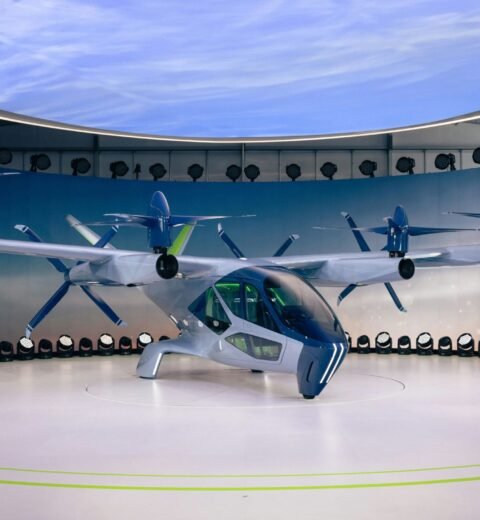
Advanced Air Mobility (AAM) is often discussed through the lens of aircraft. Sleek eVTOL designs, ambitious performance targets, and bold renderings tend to dominate headlines. But aircraft are only one component of a much larger system. For AAM to move beyond demonstrations and pilot programs into scalable, real-world operations, a broad set of enabling technologies and infrastructure must mature alongside the vehicles themselves. In many cases, these supporting layers will be just as critical to success as the aircraft.
Unmanned Traffic Management (UTM) and Airspace Coordination
One of the most foundational enablers of AAM is digital airspace infrastructure, commonly referred to as Unmanned Traffic Management (UTM). Traditional air traffic control systems were designed for lower traffic densities and human-piloted aircraft operating at higher altitudes. AAM introduces frequent, low-altitude operations that require a different approach. UTM systems are intended to support flight planning, authorization, tracking, and conflict management in a more automated and scalable way. Rather than relying on voice communications and centralized control, UTM enables data-driven coordination between operators, service providers, and regulators. Key contributors to UTM development include organizations such as NASA and Federal Aviation Administration, which have led foundational research and trials, as well as commercial providers like Unifly, OneSky, and SkyGrid. Together, these efforts are shaping how future airspace will be shared safely as operations scale.
Energy, Charging, and Power Infrastructure
Many AAM concepts rely on electric propulsion, shifting operational complexity from fuel logistics to energy management. Charging speed, grid capacity, and energy reliability all become central considerations. High-capacity charging systems, standardized interfaces, and intelligent energy scheduling will be required to support frequent operations. In some cases, on-site energy storage or microgrids may be necessary to manage peak demand and maintain operational resilience. While these challenges are not unique to aviation, the safety, uptime, and reliability requirements are significantly higher.
Ground Infrastructure and Vertiports
Ground infrastructure will play a major role in determining where and how AAM services can operate. Vertiports are more than landing pads. They must support passenger flow, vehicle charging, maintenance, safety systems, and integration with existing transportation networks. Early decisions around location, capacity, and design will have long-term implications. Well-planned ground infrastructure can enable efficient operations and community integration, while poor planning can quickly become a limiting factor.
Software, Autonomy, and Fleet Operations
As fleets grow, software becomes the connective tissue that holds operations together. Fleet management platforms coordinate scheduling, monitor vehicle health, and support maintenance planning. Operational software also enables real-time monitoring, exception handling, and human oversight, all of which are essential for safe and reliable service. Autonomy, where applied, must be paired with robust operational tooling. Real-world operations introduce variability and edge cases that extend far beyond controlled test environments, and systems capable of handling those realities will be critical to long-term success.
Certification, Standards, and Regulatory Enablement
Regulation is often framed as a constraint, but in aviation it is also a key enabler. Clear certification pathways, safety standards, and operating frameworks provide the structure required to deploy new technology responsibly and at scale. Progress in certification, safety management systems, and regulatory coordination builds trust with regulators, operators, and the public. That trust ultimately shapes how broadly AAM can be adopted.
A System-of-Systems Challenge
Advanced Air Mobility is not defined by a single breakthrough or product. It is a system-of-systems challenge spanning aircraft, software, energy, infrastructure, and regulation. While aircraft may capture the spotlight, the enabling technology and infrastructure behind the scenes will determine whether AAM transitions from promise to reality. The organizations investing across this broader ecosystem will be best positioned to shape the future of flight.